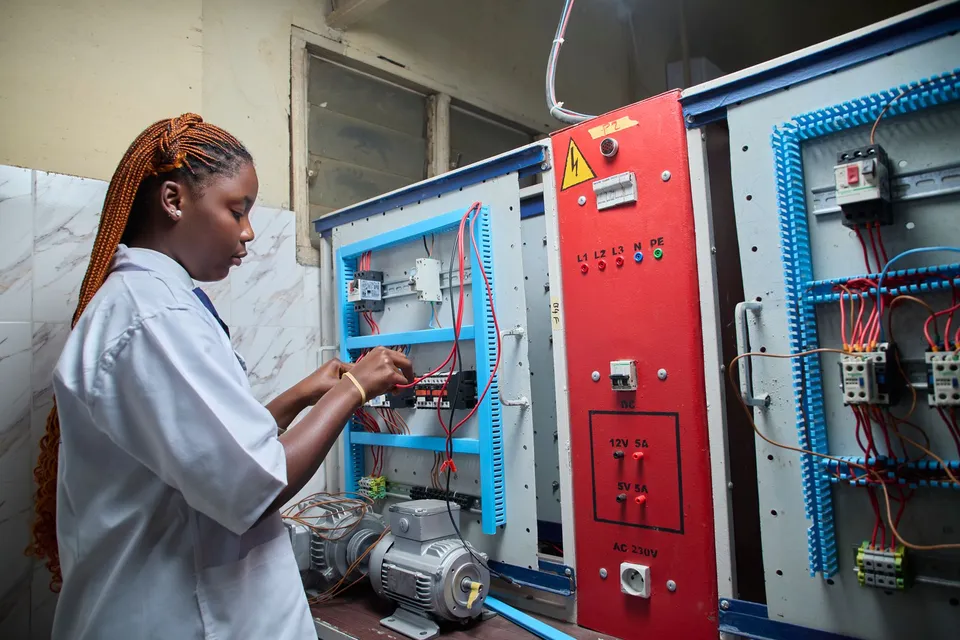
When a data center moves from project mode to operations mode, the hardest job is often not the last installation task. It is the handoff. One crew finishes the build, another crew inherits the building, and a third group may still be validating systems, closing punch lists, or training the people who will own the site after startup. That transition is why data center employment cannot be reduced to a single title like “technician.” The operating side of the industry is a serious, full-time labor market: BLS reports average hourly earnings of $59.68 for all employees in the data-processing, hosting, and related services subsector in May 2026, with average weekly hours of 38.2. In other words, this is not casual labor; it is structured technical work with real handoff pressure. BLS data-processing and hosting industry page
Turnover is not a finish line
A data center project does not become an operating site the moment the doors close on the last subcontractor. The work shifts. Construction crews focus on installation and buildout; commissioning teams test, verify, and document readiness; operators take over maintenance, incident response, and change control. The source material shows that the construction side carries its own safety and coordination load. Holder Construction’s OSHA agreement for data center projects referenced daily and weekly toolbox talks, third-party crane inspection, critical-lift planning, and injury and illness tracking. That is a reminder that the build phase is already a workforce system, not just a construction schedule.
The operating phase is governed by different obligations. Under OSHA’s lockout/tagout rule, employers must establish a program and procedures that prevent unexpected energization, startup, or release of stored energy. That matters at turnover because the site is moving from a world of open work packages to a world where one mistake can expose live equipment, stored energy, or an unplanned startup. Turnover is therefore not just paperwork. It is the moment when authority, documentation, and safe-work boundaries become operational necessities.
Three different workforces can exist inside one building
Employers often describe every technical opening as if it were the same job with a different badge. The federal occupation data say otherwise. O*NET distinguishes among HVAC mechanics, electrical power-line installers and repairers, electrical and electronic engineering technologists, industrial machinery mechanics, computer network architects, and information security analysts. Those job families overlap in a data center, but they do not do the same work. HVAC mechanics work on heating, air conditioning, and refrigeration systems. Power-line and distribution workers focus on electrical infrastructure. Engineering technologists work under engineering direction on controls and circuitry. Network architects and security analysts are working on logical systems, not chilled water, switchgear, or airflow.
That distinction matters because a person can be excellent at one stage and underprepared for another. A construction electrician may know conduit, pull boxes, and rough-in work but still need additional training before touching an operating environment. A commissioning specialist may know how to test and document readiness but not be the right fit for everyday preventive maintenance. An operating technician may be strong on logs, alarms, and work orders but have little reason to lead a startup sequence. If employers blur those lines, they create avoidable risk; if they respect them, they can hire more precisely and onboard faster.
What employers should screen for before the badge is issued
The best hiring question is not “Does this candidate have a technical background?” It is “What stage of the lifecycle has this person actually worked in?” A practical screening process should separate four things:
- Construction and fit-out experience.
- Startup and commissioning experience.
- Operating-site maintenance experience.
- IT, network, or security work that happens in the same building but is not facilities work.
That kind of specificity is not just good recruiting; it matches how the workforce pipeline is already organized. Apprenticeship.gov describes registered apprenticeship as an earn-while-you-learn model with a mentor, classroom instruction, and progressive wage increases. The program structure requires a specific occupation, a training plan, and a training provider. That is a direct clue for employers: select for the actual work package, not for a broad technical label.
This is also where employers should keep certification, licensing, and site authorization separate in their minds. A candidate may have a helpful credential, but that does not automatically mean the person is licensed for a jurisdiction, cleared for a particular site, or authorized to work on live systems. The right question is not whether the résumé sounds technical. It is whether the person has proof of safe work habits, proof of training, and authority appropriate to the task.
What applicants should be ready to show
For job seekers, the same logic works in reverse. The strongest résumé is one that names the stage, the equipment class, and the type of authority you had. Did you work during fit-out, commissioning, or steady-state operations? Did you support power, cooling, controls, or network hardware? Were you documenting work, following change control, or helping with turnover packages? Those details help an employer understand your real fit much faster than a generic line about being “hands-on.”
The training path matters too. Mesa Community College’s Data Center Operations certificate is built around industrial safety, modern maintenance operations, mechanical power transmission, data center operations, AC and DC components, PLC programming, industrial motors, and power distribution systems. Germanna Community College’s AWS-linked pre-apprenticeship focuses on electrical, HVAC, mechanical, and data center operations. Ohio University’s DCOT certificate introduces the technology, terminology, and operation of information networks and data centers. Taken together, those programs show that the industry is building multiple entry routes: some are industrial, some are control-oriented, and some are IT-adjacent.
Pay and schedules follow the job, not the slogan
One reason turnover week is such a sensitive workforce moment is that pay and scheduling are tied to the type of work, not the brand name of the facility. BLS’s industry data show a high-wage, full-time operating environment, but they do not imply a single schedule pattern for all roles. The same source set also shows that some roles are field-based and may involve travel to work sites, while other roles are fixed to a single facility. Apprenticeship adds another wrinkle: pay can rise as skill is verified, which makes the early months of employment more structured than many applicants expect.
That is the practical takeaway. Data center staffing works best when employers and applicants treat turnover as a managed transition, not a title change. Employers should define the stage, the equipment class, and the authority boundaries. Applicants should describe the exact systems and work environments they know. When both sides speak in those terms, the hire is more likely to survive the handoff and succeed after it.
If you are hiring for a turnover, commissioning, or early-operations role, start by clarifying the work package and the stage of the facility. Employers can review datacenterstaffingusa.com/employers.html, and job seekers can use datacenterstaffingusa.com/job-seekers.html to think through their next step.