A data center job is often won or lost in the maintenance shop, not the server aisle. In the federal data-processing and hosting industry, average hourly earnings were $59.68 in May 2026 and average weekly hours were 38.2, which points to a full-time technical operation rather than a loose, casual labor market. The same industry also contains a layered mix of occupations: BLS counted 24,940 computer support specialists, 14,540 computer systems analysts, and 2,630 programmers inside the industry, which is a strong reminder that data center work is not one job family but several overlapping ones. BLS data
That is why the maintenance shop matters. It is often the first place where a candidate proves they can work safely, document what they touched, follow handoff rules, and stay inside their authorization. In the daily work activities summarized in the research report, relevant occupations repeatedly include documenting activities, recording repairs, training others, assigning duties or work schedules, conferring with coworkers, and maintaining contingency plans. In a data center, those are not soft skills. They are the habits that keep preventive maintenance, escalation, and turnover from turning into guesswork.
What the maintenance shop actually teaches
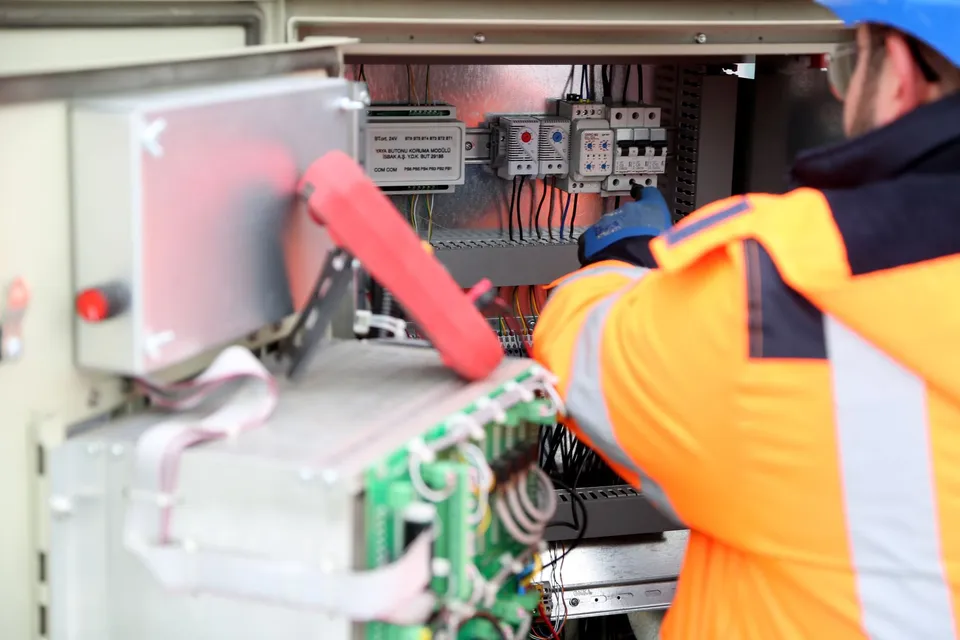
A good maintenance background is not just “handy” experience. It is usually the place where a worker learns how power, cooling, controls, and scheduling fit together. That matters because a data center facility team is not the same as an IT support team. Facilities and controls workers deal with motors, pumps, switchgear, sensors, PLCs, and power distribution. IT and cybersecurity staff deal with networks, servers, logical access, capacity planning, and security monitoring. They may share a building, but they do not do the same work.
That distinction shows up clearly in the federal occupation evidence. The research report notes that network architects and information security analysts are not facilities jobs; they operate on logical systems, network capacity, and information protection rather than on chillers, switchgear, or airflow. It also notes that title matching alone is misleading because a “technician” might maintain building equipment at one site, support network hardware at another, or work for a contractor during fit-out or commissioning.
For employers, that means a résumé that says “technical background” is not enough. For applicants, it means the most useful experience is often more specific than the title on the badge. If you have maintained motors, fixed pumps, worked on HVAC, wired controls, or documented repairs, you already have some of the language the industry uses.
The certificate route is specific for a reason
The published training paths reinforce this. Mesa Community College’s Data Center Operations certificate is only 22 credits, but it is tightly targeted: Industrial Safety, Modern Maintenance Operations, Mechanical Power Transmission Systems, Introduction to Data Center Operations, DC and AC Components and Circuits, PLC Programming and Troubleshooting, Industrial Motors and Motor Control, and Power Distribution Systems. That is not a general computer class sequence. It is an entry path for mechanical, electrical, and controls work in and around data centers. Mesa’s program
Germanna Community College’s AWS-linked pre-apprenticeship makes the same point from another angle. Its four-week program is hands-on and focused on electrical, HVAC, mechanical, and data center operations. That combination is especially useful because it shows what employers and educators are treating as the immediate skill bundle: industrial maintenance, cooling, power, and basic operations readiness. Germanna’s program
Those examples matter because they show the best entry point is often not “learn everything about data centers.” It is more often “learn the physical systems first, then add the site procedures.”
Apprenticeship is not a perk; it is a staffing model
Registered apprenticeship is another major clue about how the sector really hires. Apprenticeship.gov describes registered apprenticeship as paid work experience with a mentor, progressive wage increases, and classroom instruction. It also requires a specific occupation, a training plan, and a training provider. In other words, the employer is not just filling a seat. It is defining a job, building a learning path, and moving the worker through verified steps. Apprenticeship.gov
That structure is valuable in data centers because the work is bounded by hazards and authorization. A new hire does not simply get told to be faster. They have to learn what can be touched, who has authority, how the site records work, and how to hand off safely. The apprenticeship model fits that reality better than a vague “we’ll train the right person” promise.
How employers should screen the right way
A better screening process starts with the system, not the title. For facility-side roles, ask about electrical safety, repair documentation, basic controls, and the ability to work from written procedures. For commissioning support, ask whether the candidate has helped verify equipment, record test results, or track what settings were acceptable at turnover. For IT-side roles, ask about network support, capacity planning, logical troubleshooting, and security awareness.
The federal evidence supports that separation. O*NET-style task patterns in the research report emphasize documentation, recording repairs, training others, and maintaining contingency plans for the facility side, while the IT side includes network modeling, installation coordination, and security monitoring. Those are adjacent skill sets, but they are not interchangeable.
That is also why a construction electrician, a commissioning technician, and an operating technician should not be treated as the same candidate. The contractor may be installing systems under a project safety plan. The commissioning crew may be proving readiness and collecting evidence. The operating team inherits the asset, the maintenance record, and the incident process. A strong résumé from one stage may still need gaps filled before the person is ready for another.
What applicants should translate from prior work
If you are applying from industrial maintenance, manufacturing, HVAC, electrical work, or field service, do not undersell the parts that match data center work. Translate your experience into systems and actions: what equipment you maintained, how you documented repairs, how you escalated problems, how you handled scheduled outages, and how you worked with other trades.
If you come from IT support or networking, do the same on the logical side. Show what hardware you supported, whether you worked with network devices, how you handled incidents, and what you know about capacity, change control, or security procedures. The goal is not to claim every adjacent skill. It is to show you understand where your experience fits in the larger facility.
The practical lesson
Data centers hire best when employers stop looking for a generic “technician” and start looking for a specific system owner. The maintenance shop is often the best entry point because it teaches the discipline the building needs: safety, documentation, escalation, and respect for boundaries. If you are an employer, write the job around the exact systems and handoffs. If you are a candidate, map your experience to power, cooling, controls, or network support instead of only to the title you had.
A good next step is simple: employers can compare their needs on the employer resource page, and job seekers can review the job seeker page to translate their background into the right kind of data center work.