In U.S. data centers, the hiring mistake is often not a lack of applicants. It is the assumption that one broad technical résumé can stand in for a work system that actually contains multiple job families, multiple stages, and multiple kinds of supervision.
The federal data make that clear. BLS reports that the data-processing, hosting, and related-services subsector had 56,613 private establishments in fourth quarter 2025, and that the industry employed large groups of computer support specialists, computer systems analysts, and computer programmers alongside the physical infrastructure workforce. BLS also reported average hourly earnings of $59.68 for all employees in May 2026 and 38.2 average weekly hours, which is a reminder that this is a serious, full-time critical-infrastructure labor market, not a casual support function.
That matters because the sector does not hire from one talent pool. A data center can need a facilities technician, a controls-oriented worker, a construction crew, a commissioning support specialist, a network analyst, and a vendor interface on the same site. The mistake is to pretend they are interchangeable just because they all work around the same building. The smarter question is: which roles can be built through structured learning, and which ones need a different screening path?
Apprenticeship fits the work more naturally than generic experience
Registered apprenticeship is one of the few workforce models that already matches how data center work is taught on site. Apprenticeship.gov describes it as paid work experience with a mentor, progressive wage increases, and classroom instruction. It also requires a defined occupation, a training plan, and a training provider. That is a good fit for data center roles where the new hire has to learn safe access boundaries, documentation habits, and site-specific procedures before being trusted with more responsibility.
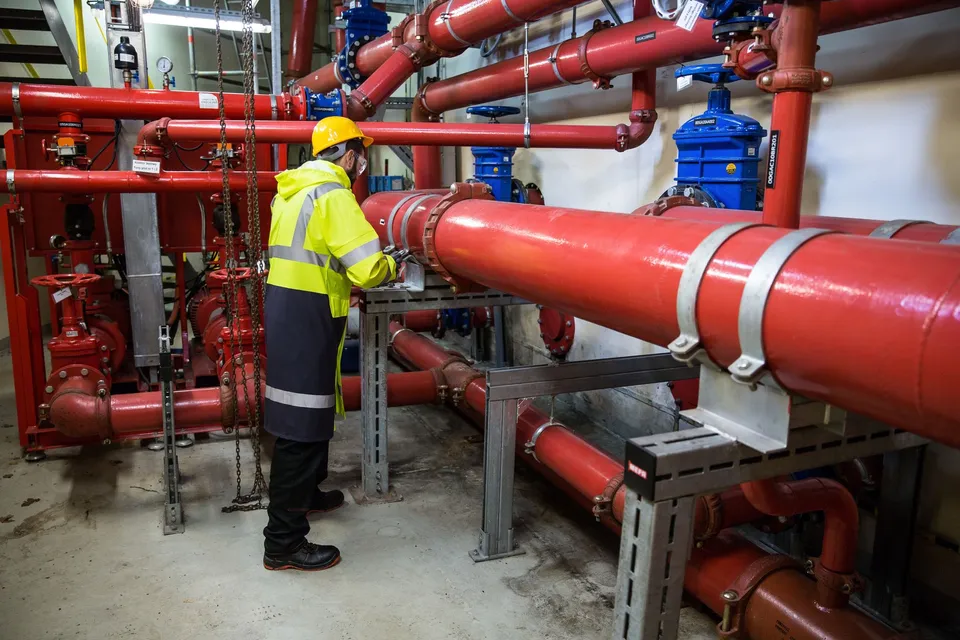
This is especially useful in facilities and operations work. O*NET task lists in the research report show that relevant occupations repeatedly involve documenting activities, recording repairs, training others, assigning duties or work schedules, conferring with coworkers, maintaining contingency plans, and coordinating installation. In plain English, the job is not only to do the work. It is to leave the work in a condition that the next person can safely continue. That is exactly the kind of skill apprenticeships can build because mentoring and repetition are part of the design, not an afterthought.
The best training pipelines teach the real mix of skills
The strongest education examples are specific, not vague. Mesa Community College’s Data Center Operations certificate is designed to prepare students for entry-level employment as mechanical, electrical, and controls technicians, and its required courses include Industrial Safety, Modern Maintenance Operations, Mechanical Power Transmission Systems, Introduction to Data Center Operations, DC and AC Components and Circuits, PLC Programming and Troubleshooting, Industrial Motors and Motor Control, and Power Distribution Systems. That sequence tells employers a great deal: the student has touched safety, electricity, motion, controls, and operations, not just general tech language.
Germanna Community College’s AWS-linked pre-apprenticeship points in the same direction. The college describes a four-week hands-on program focused on electrical, HVAC, mechanical, and data center operations. That is a practical bundle for employer-ready entry work because it mirrors the physical systems inside the building rather than pretending data center jobs are mainly office jobs with a server room attached.
The larger lesson is that the best workforce plans do not start with a title. They start with the task bundle. A plant-room helper, a controls trainee, and a network support candidate may all have useful adjacent experience, but they need different onboarding, different mentors, and different boundaries. If an employer treats those paths as one pipeline, the result is usually avoidable confusion during the first 90 days.
What employers should screen for first
For apprenticeship-friendly roles, employers should screen for habits that predict safe progression:
- Can the candidate follow written procedures without improvising?
- Can they describe what they observed, not just what they fixed?
- Do they understand when to stop and escalate?
- Can they work with a mentor and accept correction?
- Can they keep notes that someone else can use later?
Those questions matter because data center work is built on handoffs. A technician who can document a condition, preserve evidence, and hand the issue to the right person is often more valuable than a candidate who talks broadly about being hands-on but cannot explain what they touched or why.
Employers should also keep the facilities side separate from the IT side. The same BLS industry data show large employment groups in support and systems analysis inside hosting establishments, which is one reason data center staffing is layered rather than flat. A worker who is ready for facilities operations is not automatically ready for network architecture or information security, and a software or systems candidate is not automatically ready for power, cooling, or maintenance responsibilities.
What applicants should look for
For job seekers, apprenticeship and certificate pathways can be a way into the industry without waiting for the perfect résumé. The question is not whether you already know everything. It is whether your background matches a track that can be taught cleanly.
If you have industrial maintenance, HVAC, electrical, or controls experience, look for programs that connect those skills to data center operations. If you are newer to the field, look for programs that combine classroom instruction, mentoring, and a clearly defined wage progression. Those features are valuable because they make the first year more understandable and reduce the chance that a new worker is asked to perform outside their authorization.
A better workforce plan for a more complex industry
Data centers keep getting more complex, but the hiring answer does not have to get more random. Employers who build apprenticeship-style pathways can create clearer expectations, better knowledge transfer, and more durable retention. Applicants who choose those pathways can enter a field with a visible ladder instead of trying to decode one giant job title.
The practical next step is simple: employers should map one real role, one training plan, and one mentor; applicants should compare their current skills to a specific pathway instead of a generic posting. For more help, review the employers page or the job seekers page.