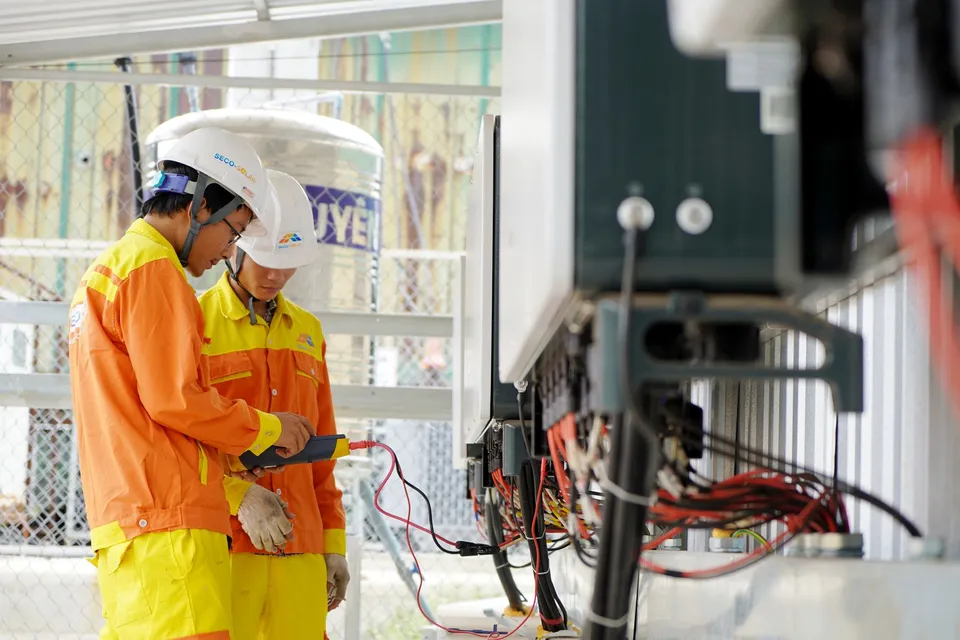
A data center site can look like one employer from the outside and still contain two very different labor markets inside it. The operating industry itself is large and technical: BLS reported 56,613 private establishments in the data-processing, hosting, and related-services subsector in fourth quarter 2025, with average hourly earnings of $59.68 in May 2026 and average weekly hours of 38.2. But the workforce mix inside those establishments is not a single “technician” class. BLS also counted 24,940 computer support specialists, 14,540 computer systems analysts, and 2,630 computer programmers in 2025, which is a reminder that facilities work, operations support, and IT work all live under the same roof without being the same job.
That distinction matters even more during construction and turnover. OSHA documentation for Holder Construction’s data center projects shows a build-side rhythm built around daily and weekly toolbox talks, third-party crane inspection, critical-lift planning, and injury-and-illness tracking. That is a project labor system, not a steady-state operations system. A site in fit-out or startup needs coordination, sequencing, and safety discipline tied to the project schedule. A live facility needs a different staffing plan: preventive maintenance, incident response, documentation, and controlled access to energized systems.
The mistake: one generic technician job for every stage
Many employers still write one broad posting and hope the right person self-selects. In data centers, that approach blurs at least three separate work patterns.
- Build and fit-out. Contractors are installing equipment, pulling cable, setting gear, and working under project controls.
- Startup and commissioning. Teams are proving systems, collecting test evidence, and handing over documentation.
- Operations and maintenance. Facility staff and vendors are maintaining live equipment under hazard controls and change procedures.
OSHA’s lockout/tagout standard is a good example of why the distinction matters. For servicing and maintenance, employers must establish procedures that prevent unexpected energization, startup, or release of stored energy. That is an operating-facility requirement, not a generic construction slogan. If a job description does not say whether the worker is expected to touch live equipment, support shutdown windows, or remain inside contractor boundaries, the employer is likely to hire for the wrong stage.
Build teams need project discipline; run teams need operational memory
The build-side team is judged by how well it moves a project forward without creating rework or safety exposure. OSHA’s data-center project agreement points to the routines that matter there: toolbox talks, lift planning, equipment inspection, and injury tracking. Those are markers of a workforce that has to coordinate around deadlines, contractors, and changing work fronts.
The run-side team is judged by something different: whether it can keep a live site stable across shifts and handoffs. O*NET work-activity language in the research report repeatedly points to documenting activities, recording repairs, training others, assigning duties or schedules, maintaining contingency plans, and coordinating installation. In plain English, the operating team needs people who leave a clean paper trail, know what they touched, and can hand work off without forcing the next shift to rediscover the same problem.
That is why a strong operations hire is not just “hands-on.” The best candidates usually show they can follow a controlled process, not merely swap parts quickly. An industrial machinery mechanic may record repairs and observe equipment before and after maintenance; an electrical and electronic technologist may work on controls and circuitry under engineering direction; a network architect may model capacity and document contingency plans. Those are related talents, but they are not interchangeable, and a hiring plan should treat them as separate lanes.
Don’t collapse facilities, IT, and cybersecurity into one job family
Data centers bring together physical plant work and digital work, but employers should not pretend those are the same thing. The research report notes that computer network architects design and implement networks, while information security analysts plan and monitor security measures and may respond to breaches. Those are logical-system roles, not chillers, switchgear, or airflow roles. A site can absolutely need both kinds of people, but it should not screen them with the same checklist.
This is also where local labor planning gets smarter. BLS industry data show that the hosting subsector includes many support and systems roles, but the real workforce around a site often extends beyond the establishment count to contractors, commissioning firms, and service vendors. In other words, the employer should decide first whether it is hiring for the operating staff, the project staff, or a vendor-supported specialty. Once that boundary is clear, titles become more useful and turnover becomes easier to manage.
Where apprenticeship fits
Registered apprenticeship is one of the clearest tools for the run side of the house because it is built around a specific occupation, a training plan, and a training provider. Apprenticeship.gov also describes it as paid work with a mentor, progressive wage increases, and a nationally recognized credential. That makes it a better fit for stable operating roles than for one-off project surges. If an employer needs a repeatable pipeline for maintenance, controls, or industrial support, apprenticeship gives structure to the skill build instead of hoping experience alone fills the gap.
A simple rule for hiring managers
Use this test before you post the job: if the work is tied to installation, turnover, or a defined project window, write for project labor. If the work is tied to energized equipment, recurring maintenance, or documented handoffs, write for operations labor. If the role touches only logical systems, write for IT or security. That simple separation will improve screening, reduce mismatched interviews, and make onboarding safer. It also helps applicants understand whether they are being hired to build the facility, run it, or support its digital systems.
If you are mapping a data center role for a build, turnover, or operations team, start with the employers page and define the stage before you define the title.