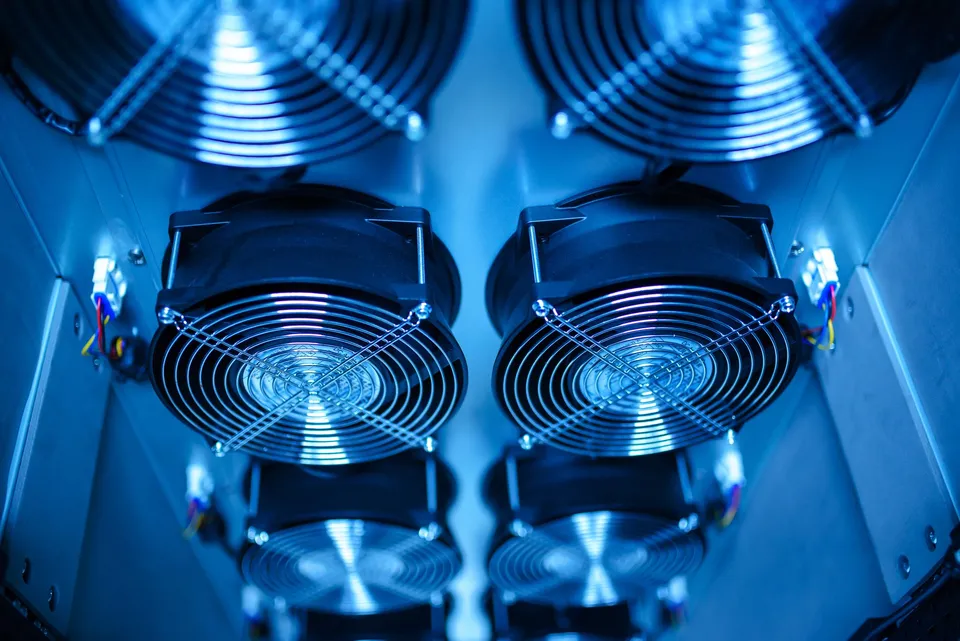
For years, many data center employers could keep cooling in the background of workforce planning. That is getting harder to do. The U.S. Department of Energy says data centers operate 24 hours a day and need a fairly steady cooling load, while its newer best-practice guide notes that high-performance computing sites have moved into direct liquid cooling as rack densities have climbed from about 60 kW per rack in 2013 to more than 125 kW per rack in some newer environments. In other words, the job is not just about adding a new piece of equipment; it is about changing which workers need which skills, which team owns which risk, and which shift has to catch the first warning sign. (energy.gov)
That is why liquid cooling should be treated as a workforce issue as much as a design choice. The moment a site moves from standard air cooling to a mixed cooling model, the old habit of writing one generic “technician” job description starts to break down. A facilities worker who understands pumps, valves, leak response, sensors, and thermal controls is not interchangeable with an IT hardware specialist who images servers, swaps drives, or troubleshoots the network. The work sits in the same building, but it does not sit in the same job. The hiring plan has to say that plainly. (energy.gov)
The shift from air-only thinking to thermal-system thinking
DOE’s cooling-control guidance shows how much of data center cooling already depends on monitored systems, networked sensors, and software that adjusts air-handling and cooling equipment in real time. That matters because liquid cooling adds another layer of coordination at the rack and loop level. Employers should not think only in terms of “more cooling capacity.” They should think in terms of who can read the system, who can isolate a fault, who can communicate across facilities and IT, and who can keep a problem from becoming a site event. (energy.gov)
For operators, that means the most valuable hire is often not the person with the most general maintenance experience. It is the person who can work within a controlled process. If a facility has sensors, controls, and a more complex thermal path, then the strongest candidate is the one who documents what changed, knows when to stop, and escalates before a small condition becomes an outage. That is an operational discipline question, not just a technical one, and it becomes more important when the cooling system itself is part of the uptime strategy. (energy.gov)
Separate the build team from the run team
Liquid cooling exposes a common hiring mistake: treating construction, commissioning, and operations as if they were the same phase. They are not. A buildout needs electricians, mechanical installers, controls specialists, and commissioning personnel who can test whether the system performs as designed. A running site needs technicians who can monitor, maintain, and respond under live conditions. The work overlaps, but the risk profile changes. A commissioning crew may validate a loop; an operations crew has to keep it stable on an ordinary Tuesday night. (energy.gov)
That is also where apprenticeship and trade pipelines matter. The Bureau of Labor Statistics says electricians typically need a high school diploma and long-term on-the-job training, often through apprenticeship, and it reports a median annual wage of $63,190 in May 2025. For data center employers, that is a reminder that the outside labor market already contains adjacent workers who understand energized systems, code discipline, and physical infrastructure. The smart question is not whether those workers are “data center people” on day one. The smart question is which ones can be trained into data center-specific work fastest without blurring safety or authorization boundaries. (bls.gov)
What employers should look for in candidates
For liquid-cooled environments, job descriptions should stop hiding behind broad titles and start naming the actual systems. A facilities candidate may need exposure to electrical distribution, cooling controls, alarms, preventive maintenance, and work-order documentation. A commissioning candidate may need experience with startup testing, punch-list closure, vendor coordination, and handoff discipline. An IT candidate may need server, storage, or network experience, but that is still a different lane from maintaining the thermal plant. If a posting asks for all of those things in one person, it is probably describing three jobs and will frustrate both candidates and supervisors. (energy.gov)
Employers should also decide early who is allowed to touch what. That sounds simple, but liquid cooling can blur boundaries if the organization does not spell them out. Which team owns the rack-side interface? Which team responds to a thermal alarm? Which vendor gets called first? Which tasks require site authorization, which require technical competence, and which require both? Clear answers shorten outages, reduce confusion at shift change, and make onboarding more realistic. That is not bureaucracy; it is how a 24/7 site avoids improvisation. (energy.gov)
What applicants can say that helps them stand out
Applicants do not need to claim they are liquid-cooling experts if they are not. They do need to translate their background into the language of the site. An electrician can name the systems worked on, the environments handled, and the safety rules followed. A mechanical technician can explain pump, piping, or chiller exposure. A controls technician can describe alarms, sensors, and building automation. A commissioning worker can show how they closed issues and documented turnover. That level of specificity helps employers see whether the candidate fits build, run, or both. (energy.gov)
It also helps applicants to say what kind of shift they can handle. Because DOE describes data centers as continuous operations with steady cooling demand, a candidate who is comfortable with nights, handoffs, and on-call responsibility is often more valuable than a candidate who only wants daytime work. That does not mean every role is overnight. It does mean the employer is buying continuity, not just labor hours. (energy.gov)
The practical takeaway
Liquid cooling is not merely a technology upgrade. It is a cue to redraw the labor map. Employers need to separate facilities from IT, construction from operations, and general maintenance from controlled thermal work. Applicants need to show which lane they belong in and which systems they can actually support. If a site gets that distinction right, it can hire more accurately, train faster, and reduce the chance that a cooling change turns into a staffing blind spot. (energy.gov)
If you are planning a new opening or preparing for a move into data center work, start by naming the stage of the site, the cooling model in use, and the shift coverage you can realistically support. That one step makes every later hiring conversation clearer.