A data center does not run on one schedule. It runs on at least two: the schedule that keeps power, cooling, and physical plant alive, and the schedule that keeps network and server support available when something breaks. That difference matters because data centers are not a small office with a server closet. The Department of Energy’s 2025 update estimates U.S. data centers used 192 terawatt-hours of electricity in 2024, about 4.7% of total U.S. electricity consumption, and projects that they could account for about 33% of total load growth from 2024 to 2030. In other words, staffing decisions in this sector are also power and continuity decisions. (energy.gov)
Start by separating the fault domains
A strong data center workforce plan begins by dividing the work into fault domains: what happens if electrical infrastructure fails, what happens if cooling or controls fail, and what happens if the network or server stack fails. If those categories get blurred, employers end up with job descriptions that sound flexible but are actually vague, and employees get called into problems they were never hired or trained to handle. That is not just an HR issue; it is a reliability issue. The right split makes it easier to decide who needs to be on site, who can be on call, and who should be a vendor or contractor rather than a direct employee. (energy.gov)
Facilities work is trade work, not generic “ops” work
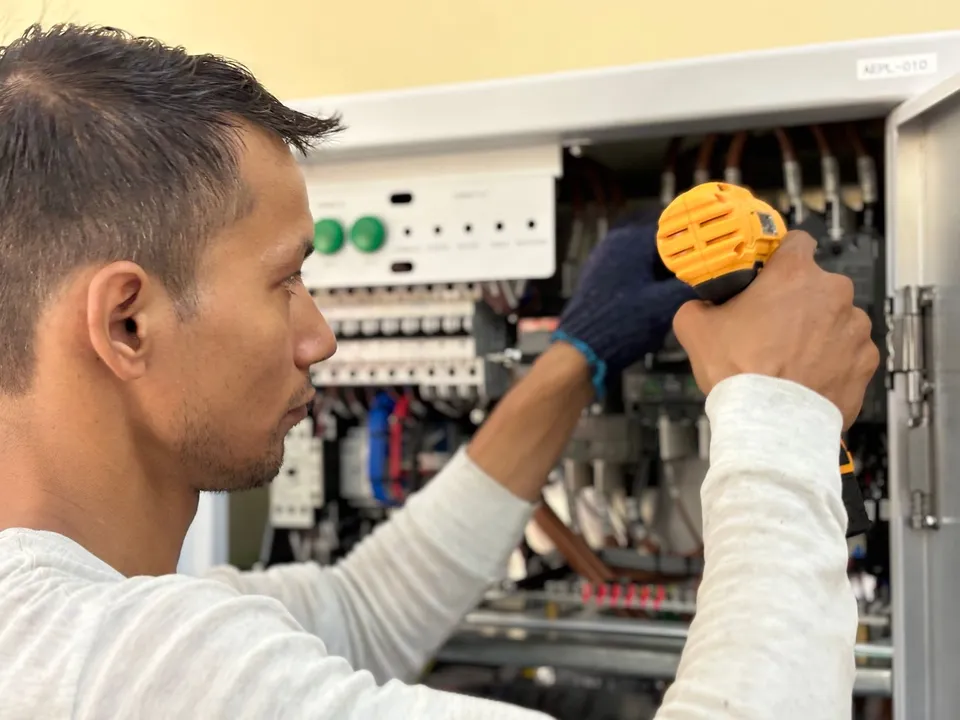
The U.S. Bureau of Labor Statistics describes electricians as workers who install, maintain, and repair electrical power, communications, lighting, and control systems. BLS also notes that almost all electricians work full time, schedules may include evenings and weekends, and overtime is common. Most learn through an apprenticeship, and many states require licensing. Those facts matter in a data center because the facilities side is not just about showing up when the alarm sounds; it is about having people with trade training, the right authority, and a schedule that fits continuous operation. (bls.gov)
That is why a data center facilities opening should be written differently from a generic maintenance opening. If the role touches switchgear, generators, UPS systems, controls, or electrical distribution, the employer needs to say so plainly. If the job is really a mix of preventive maintenance, vendor escort, and first-response coordination, that should be clear too. The safer and more useful the job description is, the better it will match people who already understand the difference between operating equipment and servicing it. (bls.gov)
IT support follows a different clock
On the IT side, BLS says computer network support specialists analyze, troubleshoot, and maintain computer networks, including LANs, WANs, and Internet systems. BLS also notes that computer support services may need to be available 24 hours a day, so some specialists work nights or weekends. That matters because a night-shift network responder is not interchangeable with a facilities technician, even if both wear badges, walk the same aisles, and work in the same building. One is protecting the availability of power and plant systems; the other is protecting the availability of network service and user connectivity. (bls.gov)
For employers, this means the staffing model should mirror the incident model. If the most likely after-hours event is a network outage, the site needs a communications path and escalation chain that reaches the right technical talent quickly. If the most likely event is a cooling alarm, the chain needs the people who know the physical plant and the approved response boundaries. In practice, the best data center teams do not just ask, “Who can come in?” They ask, “Who can legally, safely, and effectively own this problem at 2 a.m.?” (bls.gov)
Pay and shift expectations will not be the same across roles
The wage picture reinforces the split. BLS lists the median annual wage for electricians at $63,190 in May 2025, the median annual wage for computer network support specialists at $76,220, and the median annual wage for computer user support specialists at $61,860. Those figures are not data-center-specific salaries, but they show that the labor market treats these jobs as different occupations with different training paths, responsibilities, and pay structures. A staffing plan that lumps them together under one title often creates problems later, especially when overtime, on-call coverage, or certification requirements enter the picture. (bls.gov)
That also helps applicants read job postings more carefully. A higher hourly rate for a “technician” role does not automatically mean a better fit if the shift includes facilities alarms, permit-controlled work, vendor coordination, and documentation after every event. Likewise, a lower-paying support role may be a better long-term move if it offers a clearer technical lane, stronger training, or exposure to 24/7 network operations. The useful question is not just “What pays more?” but “What kind of problem am I expected to own, and what hours will that ownership require?” (bls.gov)
A cleaner hiring model for employers
A practical way to write a data center requisition is to choose one primary lane and one secondary lane.
- Facilities lane: electrical power, controls, cooling systems, and site infrastructure.
- Network/support lane: network monitoring, troubleshooting, incident response, and access coordination.
- Bridge lane: documentation, handoffs, vendor escort, and escalation management.
That structure helps managers avoid a common mistake: hiring for a title instead of hiring for the incident profile. If the building needs someone who can work through preventive maintenance windows, support outages, and outside-vendor visits, that is a facilities-centered role. If the site needs someone who can respond to customer or internal network issues any time of day, that is a support-centered role. When both are true, the employer may need two people, not one overloaded generalist. (bls.gov)
A clearer evaluation model for applicants
Applicants can use the same split during interviews. Ask which equipment, systems, and incidents the role owns; who else is on shift; what the call tree looks like after hours; and whether the job expects direct hands-on work, vendor coordination, or both. Those questions are not picky. They are how you find out whether the opening is a facilities role, an IT support role, or a hybrid role with real boundaries. In this industry, a good fit is less about being willing to do everything and more about being ready for the right kind of everything. (bls.gov)
The best data center teams respect those boundaries up front. They know the site needs both the people who keep electricity and mechanical systems stable and the people who keep network services available. When the roles are separated clearly, the schedule is cleaner, onboarding is faster, and after-hours escalation is less chaotic. When the roles are blurred, the site usually pays for it later in confusion, turnover, or delayed response. (energy.gov)
If you are defining a new opening or comparing jobs, start with one simple test: does this role primarily keep the facility running, keep the network available, or bridge the handoff between them? Once you can answer that, the rest of the staffing plan becomes much easier to write.