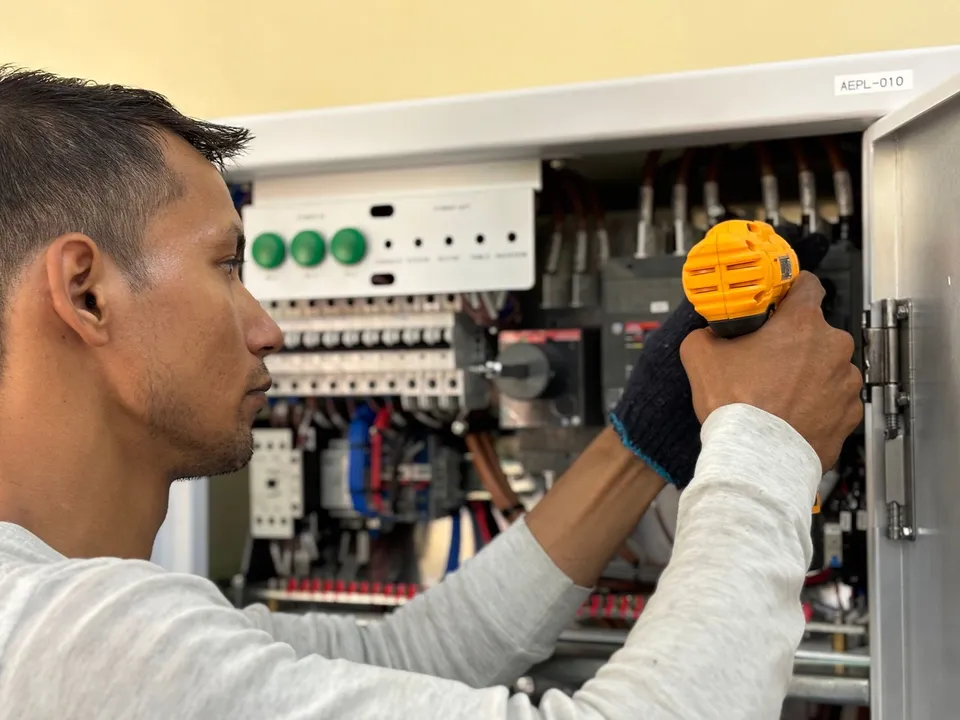
A ladder, not a leap
Data center hiring often gets described as a search for “technical people,” but the federal evidence suggests something narrower and more useful: this industry rewards people who can move up a visible skill ladder. In the U.S. data-processing and hosting subsector, BLS reported average hourly earnings of $59.68 for all employees in May 2026 and average weekly hours of 38.2, which is a reminder that this is not casual labor or a single job family. It is a full-time operating environment with different pay bands, different specialties, and different levels of authority.
That is why a strong hiring plan should not ask only, “Is this person technical?” It should ask, “What task can this person do safely on day one, and what is the next skill they can earn?” The best data center careers are built that way too.
What the training paths really say
The published training programs in the file set are not generic computer courses. Mesa Community College’s Data Center Operations certificate is built around industrial safety, maintenance operations, mechanical power transmission, introduction to data center operations, AC/DC components, PLC programming, industrial motors, and power distribution. That combination matters because it shows the field is not training only server-minded workers; it is training people who can work across power, motion, controls, and operational safety.
Other programs point in the same direction. Ivy Tech describes its Data Center Technician Certificate as a short entry point that can stack into a larger credential, while Ohio University frames its Data Center Operator Training Certification as introductory and foundational, focused on the technology, terminology, and operation of information networks and data centers. Together, those programs show a real pattern in the industry: start small, learn the language, and stack toward a more specialized role.
That is where apprenticeship fits. Apprenticeship.gov says registered apprenticeship includes paid work experience with a mentor, progressive wage increases, and classroom instruction. In other words, the wage and the skill should rise together. For employers, that is not just a training slogan. It is a retention tool. For applicants, it is proof that you do not need to arrive fully formed to have a serious path in the sector.
Why employers should care about sequence
Data center work breaks down poorly when job descriptions collapse too many duties into one title. The source set makes the boundaries clear. O*NET distinguishes facilities and infrastructure work from IT design and cyber work: computer network architects maintain contingency plans, coordinate hardware and software installation, develop testing routines, and document network-related activities, while information security analysts plan and monitor security measures and respond to breaches. Those are not facilities jobs, even though they may sit in the same building.
The facilities side has its own rules. OSHA’s lockout/tagout standard requires employers to establish a program and procedures that prevent unexpected energization, start-up, or release of stored energy. That means a new hire’s first lesson is not speed; it is boundary control. The worker must know what can be touched, what must be isolated, and who is authorized to do what. In a data center, that difference is safety-critical.
That safety reality also explains why onboarding should look different from ordinary office onboarding. O*NET’s detailed work activities for relevant occupations repeatedly include documenting activities, recording repairs, conferring with coworkers, maintaining contingency plans, and assigning duties or work schedules. Those are not paperwork extras. They are the habits that keep handoffs clean when maintenance, vendor support, or shift coverage changes. A worker who can document cleanly and escalate correctly is often more valuable than a worker who simply has broad experience but no discipline around the handoff.
Construction and commissioning add another layer. Holder Construction’s OSHA agreement for data center projects documented daily and weekly toolbox talks, third-party crane inspection, critical-lift planning, and injury/illness tracking. That is a different labor environment from steady-state operations: more temporary crews, more active sequencing, and more project safety coordination. A hiring plan that treats construction, commissioning, and operations as the same thing will miss the real transition points where workers either succeed or fail.
What applicants should look for
If you are trying to enter the sector, the best opening is not always the biggest title. Look for roles that make the next step visible. A good first role may teach you industrial safety before independence, or maintenance basics before controls work, or documentation before troubleshooting authority. If a job can show you the next rung, it is probably a better career move than a role that only asks you to “be technical.”
That advice matters because the industry contains multiple ladders. A person with HVAC, mechanical, or industrial-maintenance experience may fit well in plant-room or facilities work. A person with server-room support or cabling experience may be a better fit for physical infrastructure support. But neither background automatically makes someone ready for network architecture, cybersecurity, or advanced commissioning authority. The site may be the same; the job is not.
The same logic helps explain compensation and retention. BLS’s industry averages show that hosting establishments support technical and professional pay bands, while apprenticeship adds a structured pay progression tied to skill gains. That combination suggests a healthy data center career is not built on one big raise at the end. It is built on measurable steps, documented competence, and a path that workers can see in advance.
The practical takeaway
For employers, the hiring question should be, “What can this person safely own now, and what can we teach next?” For applicants, the better question is, “Does this role move me toward a stronger rung on the ladder?” When both sides use that frame, the site gets more reliable coverage, and the worker gets a real career instead of a dead-end title.
If you are refining a hiring plan, review the role against the task map first. If you are job searching, compare your background to the kind of ladder you want next, not just the label on the posting. You can start with the employer overview at datacenterstaffingusa.com/employers.html or the job seeker overview at datacenterstaffingusa.com/job-seekers.html.