In a data center, “technical experience” is too blunt a label to hire on. A person who can maintain chillers and pumps may be a strong facilities hire, but that same background does not automatically prepare someone to tune controls, commission a new room, or manage network equipment. That distinction matters because the operating sector is large and varied: BLS reports 56,613 private establishments in the data-processing, hosting, and related-services subsector in fourth quarter 2025, with average hourly earnings of $59.68 for all employees in May 2026. The pay signal is strong, but it sits inside a workforce that mixes facilities, IT, project, and vendor roles rather than one uniform job family.
For employers, the first staffing decision is usually not “How many technicians do we need?” It is “Which workforce are we hiring for?” In practice, a site needs at least three different kinds of labor. The first is facilities operations: mechanical and electrical staff who keep power and cooling systems ready. The second is controls and commissioning: people who test, verify, document, and help turn equipment over safely from project mode to steady-state operations. The third is IT and network work: people who manage logical systems, capacity, and security. Treating those as interchangeable is the fastest way to hire the right title and the wrong capability.
Facilities roles are the easiest to misunderstand because the work looks generic from the outside. ONET describes HVAC mechanics as workers who install or repair heating, central air conditioning, ventilation, and refrigeration systems. In a data center, that means the job is centered on the mechanical plant, air movement, temperatures, and support equipment—not server administration or cybersecurity. ONET also separates industrial machinery mechanics, whose work includes recording repairs, observing equipment in operation, and maintaining repair records. That is a good fit for a facilities team that has to preserve equipment history, not just fix what is broken today.
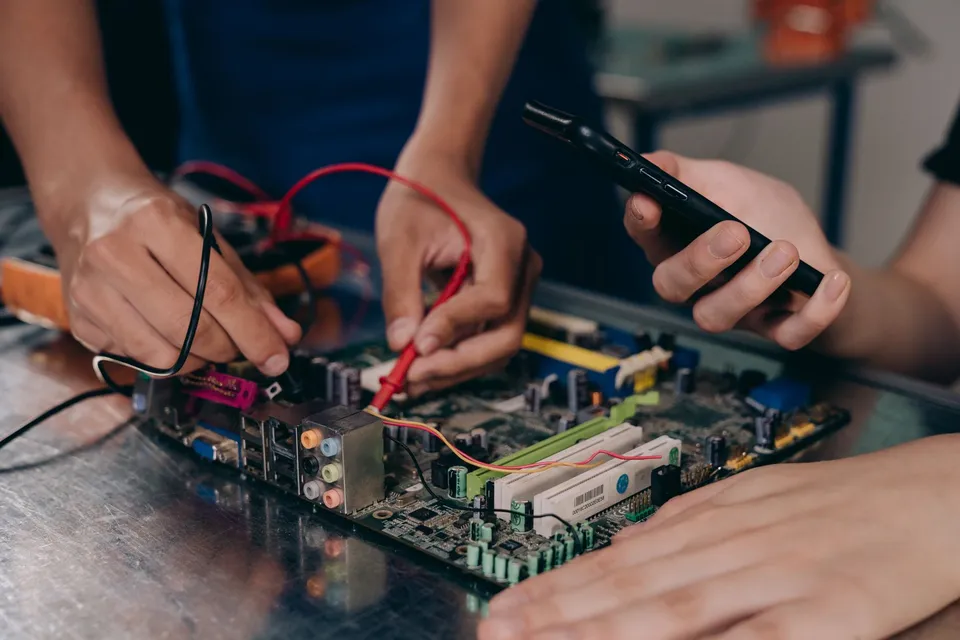
Controls and commissioning are a different lane. O*NET’s Electrical and Electronic Engineering Technologists and Technicians apply electrical and electronic theory under engineering direction to design, build, repair, adjust, and modify controls and machinery. That is the kind of work employers often need during startup, testing, and turnover, when a site is proving that sensors, panels, automation, and equipment sequences behave as intended. The important boundary is that this role sits between engineering and hands-on maintenance: it is more analytical than a routine repair role, but it is not the same as a network architect or security analyst.
The IT side has its own rules. O*NET’s Computer Network Architects design and implement data communications networks, model capacity needs, and recommend hardware and software, while Information Security Analysts monitor security measures and respond to breaches or viruses. Those are not facilities jobs, even when the people work in the same building. A candidate who understands cabling or server-room support may be useful for physical infrastructure, but that does not prove readiness for network design, capacity planning, or cyber defense. Employers who blur that line often end up with job descriptions that overpromise and onboarding plans that underteach.
That is why training pipelines matter so much. Apprenticeship.gov says registered apprenticeship combines paid work experience with a mentor, classroom instruction, and progressive wage increases. It is not just a recruiting slogan; it is a structured employment model. In the data center context, that structure is valuable because the worker must learn boundaries, procedures, and documentation habits before working independently around live systems. The same logic appears in college programs built around the field. Mesa Community College’s Data Center Operations certificate includes industrial safety, modern maintenance, mechanical power transmission, data-center operations, AC/DC components, PLC programming, industrial motors, and power distribution. That curriculum tells employers exactly what the learner has studied—and what still needs supervision.
This is also where workforce management becomes more than scheduling. O*NET task lists repeatedly emphasize documenting activities, recording repairs, training others, maintaining contingency plans, and conferring with coworkers. In other words, handoffs are a core job skill. A technician who can describe the condition clearly, pass work to the right specialist, and preserve the record for the next shift is not just “detail oriented”; that person reduces repeat work and lowers operational risk. In a site that runs around the clock, that habit is as valuable as wrench time.
Safety makes the boundaries even more important. OSHA’s lockout/tagout rule requires employers to establish procedures that prevent unexpected energization or release of stored energy. That means onboarding cannot stop at a map of the building or a quick equipment tour. New hires need to know what they may touch, what they must never touch without authorization, and how the site records controlled work. For employers, that turns training into a compliance system. For applicants, it means “experience” only counts when it includes safe, documented work habits.
A practical hiring rule follows from all of this: match the role to the work package, not just the facility name. Ask three questions before you post or accept a candidate.
- Is this a facilities role, a controls/commissioning role, or an IT/network role?
- Is the person expected to maintain live equipment, verify startup work, or support logical systems?
- Does the role require a mentor, a credential path, or a documented handoff process?
That may sound simple, but it is the difference between a team that can absorb growth and a team that keeps re-learning the same lessons. The best next step for employers is to map one open role into those three layers before writing the job post. Applicants can do the same exercise on their own résumé: state whether their experience is in facilities, controls, or IT, and explain which equipment, systems, and handoff practices they actually handled.