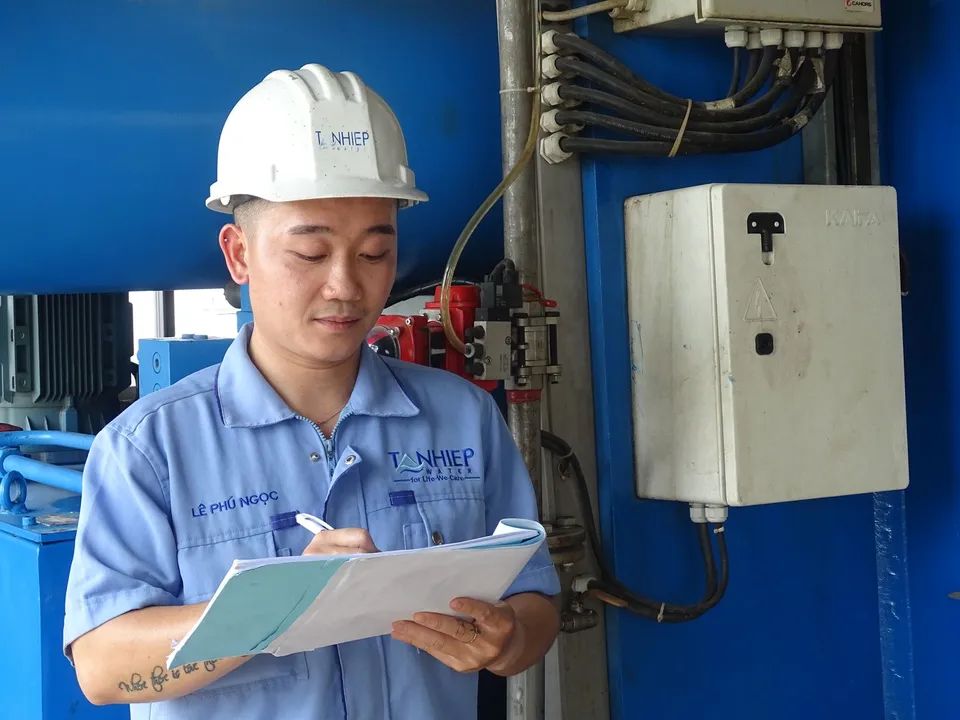
The hidden asset in a data center is not hardware. It is memory.
Data centers run on equipment, but the workforce problem is often much more human: who remembers the last safe setting, the last clean handoff, and the last repair that looked simple until it wasn’t? Federal occupation data make that plain. O*NET’s detailed work activities for data-center-adjacent jobs repeatedly include documenting activities, recording repairs, training others, assigning duties or work schedules, conferring with coworkers, maintaining contingency plans, and coordinating installation. At the same time, Apprenticeship.gov describes registered apprenticeship as paid work experience with a mentor, progressive wage increases, and classroom instruction. Put those two facts together and the real lesson is hard to miss: a data center stays reliable because knowledge moves forward, not because one person carries it alone.
That is why retention in this industry is not just a turnover statistic. It is a continuity problem. When a team loses the person who knows the sequence for a maintenance job, the quirks of a controls loop, or the reason a temporary workaround was left in place, the site does not merely lose headcount. It loses context. On a live facility, context is part of the safety system. OSHA’s lockout/tagout rule requires employers to establish procedures that prevent unexpected energization, start-up, or release of stored energy, which means workers cannot rely on memory alone when equipment is being serviced. Clear notes, clear authority, and clear handoffs are part of the hazard control.
Why this is a workforce issue, not a paperwork issue
It is easy to treat logs, maintenance records, and shift notes as clerical chores. In data center work, they are production tools. A technician who documents what was observed, what was changed, what stayed untouched, and who now owns the next step saves the site from repeating the same diagnosis later. That matters because data center work is rarely a one-and-done task. The same person may have to coordinate with facilities staff, controls specialists, network staff, contractors, or vendors, each of whom owns a different piece of the system. O*NET’s work-activity language shows that this coordination is not optional fluff; it is embedded in the job.
The schedule data help explain why. In the data-processing, hosting, and related-services subsector, BLS reported average weekly hours of 38.2 for all employees and 37.5 for production and nonsupervisory employees in May 2026. That is a full-time operating pattern, not a loose casual-labor model. In practice, that means a site cannot depend on endless extra hours or on one hero technician who never leaves. The work has to be designed so the next person can step in and understand what happened before them.
There is a second reason this matters: the jobs are not interchangeable. Facilities work, controls work, and IT work may happen under one roof, but they are not the same labor. The person maintaining pumps or switchgear is not doing the same job as the person modeling a network or monitoring security. If the handoff language is sloppy, roles blur and accountability gets weaker. Good documentation restores the boundary by naming who saw the issue, who can act on it, and who must be told before the next step. That is workforce management in its most practical form.
What employers should look for before they call a hire “ready”
A strong data center hire is not just someone with a technical title. It is someone who can work inside a system of authorization, documentation, and escalation. That is why the best screening questions are often behavioral: Can the person explain what changed and why? Can they tell the difference between observing a condition and being authorized to correct it? Can they write a note that helps the next shift act faster, not slower? Those questions are more predictive than a generic claim of having a “technical background.”
Training programs underline the same point. Mesa Community College’s Data Center Operations certificate includes industrial safety, modern maintenance operations, mechanical power transmission systems, an introduction to data center operations, DC and AC components and circuits, PLC programming and troubleshooting, industrial motors and motor control, and power distribution systems. That curriculum tells you something important: entry-level data center work is built from specific, stackable knowledge, not from vague familiarity with computers. If a candidate can describe how they learned a procedure, documented a repair, or worked through a supervised handoff, that is often more useful than a résumé line that simply says “technician.”
Employers should also treat apprenticeship as a retention tool, not just a recruiting channel. Apprenticeship.gov’s model pairs paid work with a mentor and progressive wage increases, which gives a new hire a reason to stay long enough to become useful in a live facility. That structure is especially valuable in a field where live equipment, change control, and safe access rules narrow the number of tasks a new worker can perform independently at first. The organization that teaches well is usually the organization that retains better.
What applicants should ask before they say yes
Job seekers often focus on title, shift, and pay. Those matter, but in data centers there is another question worth asking first: how does knowledge move here? A serious candidate should want to know whether the site uses shift logs, work-order comments, change records, or daily handoff notes; whether new hires shadow a mentor; and whether the team expects people to write down what they learned or simply remember it. Those answers say a lot about whether the employer is building a career path or just filling a hole.
Applicants should also ask where the line is between observation and action. If a role includes facilities systems, controls, or IT-adjacent responsibilities, the worker needs to know what they are allowed to touch, what must be escalated, and what requires a second set of eyes. That is not just a safety issue; it is a professionalism issue. People who work well in critical infrastructure usually want clear boundaries because boundaries keep the site stable and the learning curve honest.
For applicants coming from schools or apprenticeships, the strongest preparation is often a mix of technical vocabulary and disciplined habits. If your training included safety, maintenance, power distribution, PLCs, or cooling concepts, say so. If you have experience with written logs, job packets, or documented handoffs, say that too. In this industry, the ability to preserve continuity is part of the skill set.
The practical bottom line
The best data center teams do not treat documentation as an afterthought. They treat it as a live technical skill, because it protects safety, shortens downtime, and lets the next worker start from facts instead of guesses. That is why retention and onboarding are not separate from operations; they are how operations stay dependable. The site that teaches handoffs well is usually the site that runs well.
If you are hiring, review one recent work order and ask whether it would help a new teammate act faster. If you are looking for work, be ready to explain how you document repairs, learn procedures, and handle handoffs. You can start by reviewing the Employers and Job Seekers pages, then decide what kind of role or training path fits your experience best.