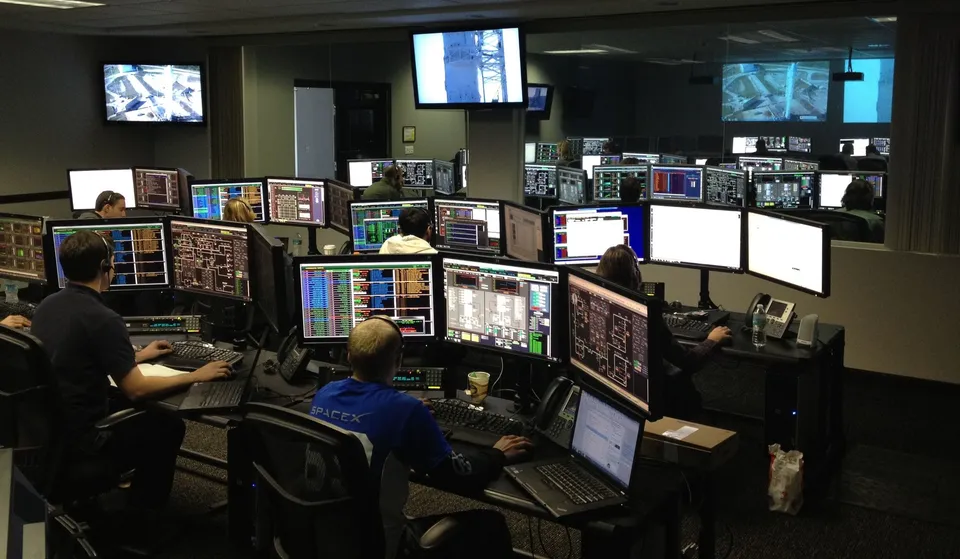
A dedicated enterprise data center can sometimes run with one internal audience in mind. Colocation is different. The Department of Energy says more than half of the current data-center pipeline—and an even larger share of the projects already planned—are colocation facilities, where one building serves multiple separate entities. DOE also distinguishes dedicated data centers, which exist solely for IT operations, from service-provider and colocation sites that host IT equipment for multiple customers. That customer mix changes the worksite, and it changes the hiring plan. (energy.gov)
What the customer-operations role actually does
In a colocation facility, the hardest problems are often not purely mechanical or purely technical. Someone has to coordinate access, schedule maintenance windows, route approvals, record who was notified, and keep tenant teams informed when the site changes state. That is not the same as running a cooling plant, and it is not the same as supporting servers, switches, or cybersecurity tools. It is a coordination job built around the rules of a shared property. (energy.gov)
Think of it as the role that keeps a multi-tenant building legible. A facilities technician may know exactly which pump, valve, breaker, or air handler needs attention. A tenant engineer may care only about the service window and whether a rack move will delay deployment. The customer-operations person has to understand both sides well enough to move information cleanly between them. In practice, that means tracking tickets, documenting access, matching the right vendor to the right window, and making sure the next shift can see what happened without guessing. This is why strong writing and process discipline matter as much as mechanical familiarity. (energy.gov)
Why this job is not just a facilities job
The facilities side of the house is specialized trade work. The Bureau of Labor Statistics says heating, air conditioning, and refrigeration mechanics and installers install, maintain, and repair heating, cooling, and refrigeration systems, and the occupation typically requires a postsecondary nondegree award plus long-term on-the-job training. BLS also projects employment in that occupation to grow by 48,200 jobs from 2023 to 2033. That matters for data centers because the people who keep power, airflow, humidity, and temperature in range are not interchangeable with people who manage customer communication. (bls.gov)
That distinction helps employers avoid one of the most common staffing mistakes in shared facilities: assuming a good technician automatically makes a good customer-facing coordinator, or that an experienced coordinator can improvise around site rules. The first person may understand equipment but not tenant expectations. The second may understand people but not the consequences of poor change control. Colocation sites need both skill sets, and they need the boundary between them to stay visible. (energy.gov)
What to hire for
A strong customer-operations hire in a data center does not need to be the deepest technical expert in the building. The better test is whether the person can keep several workstreams accurate at once. Look for:
- Calm written communication when a change request turns into a live issue.
- Ticket discipline, meaning updates are complete, time-stamped, and easy to follow.
- Enough facility literacy to recognize when a request touches power, cooling, access, or vendor escorting.
- Good judgment about escalation, especially when a tenant need could collide with a maintenance window.
- Respect for boundaries, because access authority is not the same as technical authority.
Those traits are especially useful in colocation because one mistake can spread across multiple customers. A poor note, a missed notice, or an unclear handoff can create confusion far beyond the original task. A good coordinator reduces friction for technicians, protects the tenant relationship, and gives supervisors a cleaner view of what is really happening on site. That is an operations advantage, not just an administrative one. (energy.gov)
What applicants should know before they apply
Applicants sometimes assume this kind of role is a generic office position. It is not. The best candidates usually like structured problem-solving, high-volume communication, and work that sits close to real infrastructure. Experience in dispatch, facilities support, field-service coordination, logistics, maintenance scheduling, or customer service can transfer well if the person is comfortable with documentation and change control.
It also helps to understand what the role is not. It is not the IT help desk, and it is not the network team. It is not the person who replaces the technician. It is the person who makes sure the right people know what is happening, when it is happening, and what was approved. In a multi-tenant building, that is a real skill, not a filler job. (energy.gov)
A better staffing question for employers
Instead of asking only how many technicians a site needs, colocation employers should also ask who owns the customer side of site change. If the answer is nobody, technicians end up fielding too many status questions, tenants get incomplete updates, and supervisors spend time reconciling conflicting versions of the same event. If the answer is one clearly defined role, the site runs with less noise and more trust.
That is the real lesson in the current buildout: shared data centers are not just bigger buildings. They are more complicated human systems. The best workforce plan treats that complexity as a job to staff, not a problem to absorb. For employers, start with the employer page. Job seekers can review the job seeker page, or call 218-WorkNow and email the office for a next step.