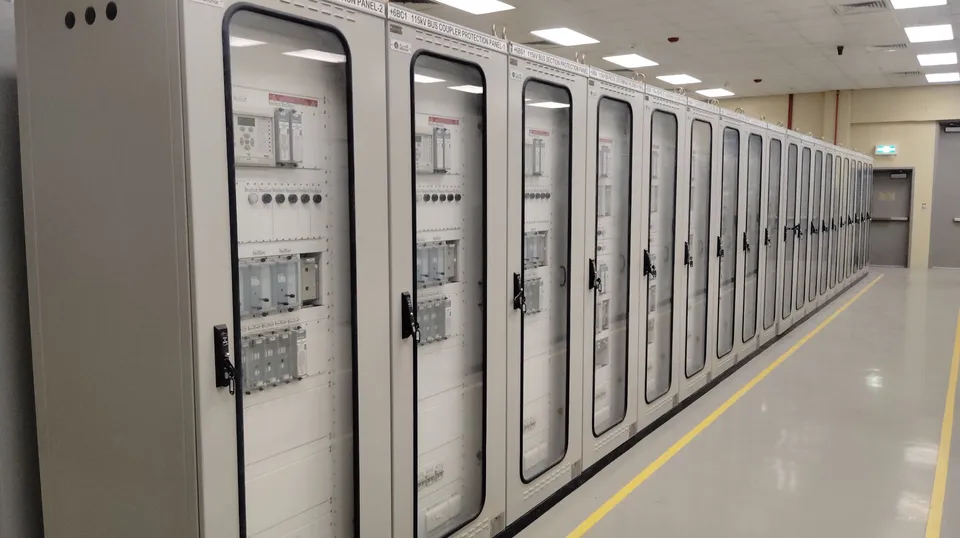
A data center does not become “operational” the moment the last rack is bolted down. Between construction and steady-state operations sits a workforce stage that often gets treated as a technical footnote: commissioning, turnover, and the first clean handoff to the people who will own the site. That stage has its own labor needs, safety rules, documentation burden, and skill mix. In the construction phase, the work may look like the Holder Construction project framework with daily and weekly safety toolbox talks, third-party crane inspection, critical-lift planning, and injury tracking; in the operating phase, the work shifts toward maintenance procedures, documentation, and controlled access to live systems. Those are not the same jobs, even when the building is the same.
That distinction matters because commissioning is where the workforce changes hands. A contractor or manufacturer team may still be on site, but the purpose of the work changes from installation to proof of readiness. A commissioning lead is not simply “the person who checks equipment.” The role sits between construction, facilities operations, and sometimes building controls or networked monitoring systems. O*NET’s task language for related occupations repeatedly emphasizes documenting activities, developing contingency plans, recording repairs, coordinating installation, and training others. In other words, commissioning is as much about written evidence and handoffs as it is about measurements.
For employers, the first lesson is that commissioning needs its own staffing plan. The people who install systems are not automatically the best people to accept them into operations, and the people who run the site after turnover are not always the right people to test every subsystem under project pressure. The workforce has to be sequenced by stage. BLS’s industry data underscore how specialized that operating workforce already is: in the U.S. data-processing and hosting subsector, BLS reported 56,613 private establishments in fourth quarter 2025 and average hourly earnings of $59.68 for all employees in May 2026, with average weekly hours of 38.2. That is a serious operating labor market, not a casual add-on to construction staffing.
Commissioning also exposes the boundary between facilities work and IT work. The same building may contain electrical distribution, cooling systems, controls, network hardware, and security monitoring, but those are not interchangeable responsibilities. O*NET describes computer network architects as designing and implementing networks, while information security analysts plan and monitor security measures for computer networks and information. Those are logical-system jobs. They are different from the facilities-side work of maintaining pumps, chillers, switchgear, airflow, and controls. A commissioning team may coordinate the interface between those worlds, but it should not blur them together.
That is why good commissioning teams are cross-disciplinary. The U.S. Department of Energy’s Data Center Energy Practitioner material says a person needs basic knowledge of other data center disciplines to identify and quantify energy-saving opportunities. That is a subtle but important point: efficiency work is not isolated to one trade. To verify a system and spot a problem, someone has to understand how cooling, airflow, power, controls, and operations affect one another. A commissioning technician who cannot read across those boundaries may miss an issue that only appears when two systems interact.
For supervisors, that means onboarding should teach authority boundaries before speed. A new hire may be technically capable, but if they do not know what they may touch, when to stop, or who owns the next step, the site becomes dependent on guesswork. OSHA’s energy-control rules exist for exactly this reason: employers must prevent unexpected energization and require controlled procedures for servicing and maintenance. In commissioning, those rules shape how the team tests equipment, records status, and returns systems to service. The work is not “just testing”; it is controlled transition work.
For applicants, commissioning can be a strong entry point if you already have disciplined habits. Registered apprenticeship is one of the clearest pathways because it pairs paid work experience with a mentor, classroom instruction, and progressive wage increases. That model fits commissioning well because the job rewards people who can document conditions, follow procedures, ask precise questions, and learn the site’s language quickly. A certificate can help, but a certificate is not the same as site authorization, and neither is the same as experience on live equipment.
The practical takeaway is simple: if your data center is nearing turnover, build the workforce plan around handoff, not just headcount. Name the person who owns the test, the person who accepts the result, and the person who will maintain the record after the contractor leaves. If you are an employer, start with a one-page stage map for each major system and align it with the team that will inherit the site. If you are exploring the work, review the employer resources at datacenterstaffingusa.com/employers.html and compare them with the skills you can already document.