In data centers, a job title can hide three very different realities: what systems a worker touches, who owns the work at that moment, and whether the person is in a live operating site, a construction project, or a support vendor role. That matters because the industry is not one labor market with one kind of employee. The Bureau of Labor Statistics says the data-processing, hosting, and related-services subsector had 56,613 private establishments in fourth quarter 2025, and in May 2026 the industry averaged $59.68 an hour for all employees with 38.2 weekly hours. Those figures point to a serious operating workforce, but not a single uniform job family.
The real hiring question is not experience
The better question is: what is this person allowed to touch, change, and sign off on?
That sounds simple, but it is the difference between a safe hire and a confused one. A facilities mechanic, a controls technician, a network architect, an information security analyst, and a construction electrician may all work at the same site, yet they do not perform the same labor or carry the same authority. O*NET separates these roles clearly. HVAC mechanics work on heating and refrigeration equipment; electrical power-line installers and repairers work on power distribution systems; electrical and electronic technologists work on controls and machinery; computer network architects design and implement networks; information security analysts monitor and protect those networks. In other words, a data center is a shared building, not a shared job description.
That distinction helps employers avoid a common mistake: hiring for a broad technical background and assuming the worker can cross every boundary on day one. Commercial HVAC experience may transfer well into a plant-room support role, but it does not automatically qualify someone to work on energized switchgear, commissioning evidence, or logical network design. Likewise, a cabling or server-room background may support physical infrastructure work, but it is not the same thing as network architecture or cybersecurity. The practical recruiting lesson is that skills mapping matters more than a generic technical label.
Stage matters as much as skill
A data center project changes hands several times before it settles into steady operations. During construction and fit-out, contractor crews install equipment, pull cable, set gear, and work under project safety plans. During startup and commissioning, the focus shifts to proving that systems work as intended and that the documentation matches the actual installation. During turnover, the operator begins to accept responsibility. During ongoing operations, the employer owns the maintenance system, incident response, and training record. OSHA’s lockout/tagout framework makes that progression concrete by requiring employers to establish energy-control procedures for servicing and maintenance, while also recognizing that construction and general industry follow different rules.
That is why construction electricians, commissioning personnel, and operating technicians should not be treated as interchangeable. A construction crew may be excellent at installing conduit, setting equipment, and working through a lift plan. A commissioning team may be strongest at testing, documenting, and proving readiness. An operations technician may be the person who keeps the site stable month after month. The labor may overlap, but the responsibility does not. Holder Construction’s data-center-project agreement shows the project side of that world clearly, with daily and weekly toolbox talks, third-party crane inspection, critical-lift planning, and injury and illness tracking. That is not a steady-state operations schedule; it is a project labor system built around controlled handoffs and active supervision.
What employers should screen for
For employers, the easiest way to sharpen a requisition is to separate three questions:
- What equipment or systems will this worker touch?
- At what project stage will the worker operate?
- What proof is required before the worker can enter live areas?
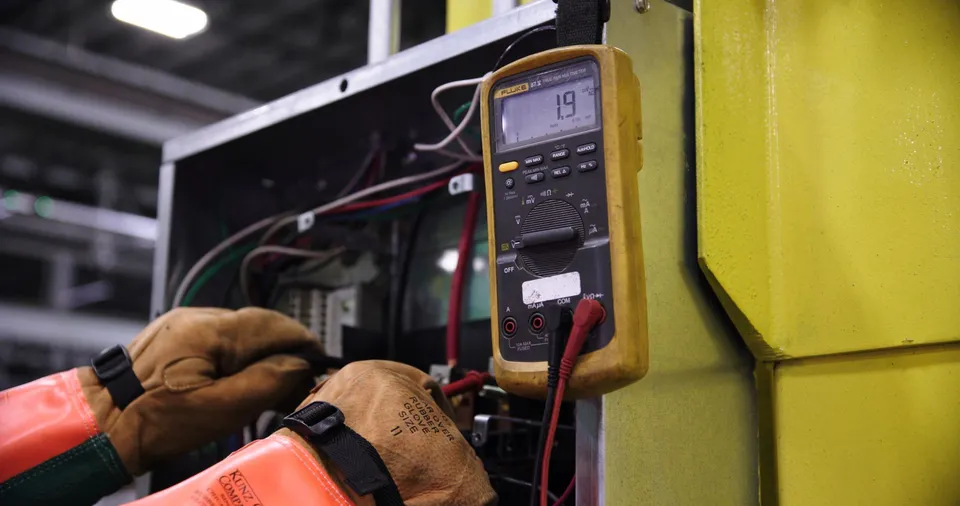
Those questions force clarity around facilities operations, IT support, and cybersecurity. They also help distinguish technical fluency from site authorization. A certificate, an apprenticeship, or prior experience may show that someone has learned the language of the work. It does not automatically mean the person has been cleared for live switching, hazardous-energy work, or unsupervised access. OSHA’s standards around lockout/tagout and electrical hazards make that boundary real, not theoretical.
Apprenticeship is especially useful here because it is a documented employment structure, not just a training slogan. Apprenticeship.gov describes registered apprenticeship as paid work experience with a mentor, progressive wage increases, and classroom instruction. It also requires a defined occupation, a training plan, and a training provider. That makes apprenticeship a strong fit for data center work where employers need repeatable skill growth and safer onboarding, not just a résumé that says technical.
The training pipeline already reflects that logic. Mesa Community College’s Data Center Operations certificate is designed for mechanical, electrical, and controls technician preparation, with coursework in industrial safety, maintenance operations, power transmission, AC/DC components and circuits, PLC programming, industrial motors, and power distribution. Germanna Community College’s infrastructure pre-apprenticeship covers electrical, HVAC, mechanical, and data center operations. Ohio University’s Data Center Operator Training Certification introduces the terminology and operation of information networks and data centers. Taken together, those programs show that the sector is building entry routes from multiple angles, not one.
What applicants should read in a posting
Applicants can use the same boundary test when they evaluate an opening. If a posting leans on industrial safety, motors, PLCs, power distribution, or mechanical systems, it is probably a facilities or controls role. If it emphasizes network planning, capacity modeling, or contingency planning, it is more likely an IT infrastructure role. If it highlights toolbox talks, crane coordination, or critical lifts, it is probably a project-side job. If it mentions mentoring, progressive wage steps, or stackable credentials, it may be part of a formal apprenticeship pipeline.
That reading skill matters because pay, schedule, and growth path can be very different across roles that sound similar on paper. The BLS industry average of $59.68 an hour is a broad subsector average, not a promise for any one job. BLS also shows that wages inside hosting establishments vary widely by occupation, which is exactly what you would expect in a workplace that includes support specialists, systems analysts, programmers, and the physical infrastructure teams that keep the lights on. Compensation discussions should therefore separate base pay, overtime, on-call expectations, and any field-travel requirements.
Workforce planning is local, not abstract
The same job title can land very differently depending on the market. The research set notes that housing and commuting pressures vary by region, and it compares FY 2026 two-bedroom fair-market rent levels of $2,246 in Washington-Arlington-Alexandria and $1,839 in Phoenix-Mesa-Chandler. That does not prove where labor shortages exist, but it does show why relocation, commute distance, and retention can feel very different from one market to another. Employers who ignore geography often misread why a role is hard to fill or why a candidate hesitates to relocate.
That is especially true in a sector where some work is rooted in a local facility and some work is tied to travel, vendor visits, or regional project pipelines. The federal source set points to both patterns: fixed-site operations, regional pre-apprenticeships, and field-based power work. Good workforce planning needs to match the actual travel, housing, and schedule burden of the role instead of assuming every technical opening lives the same life.
A better way to write the role
The strongest data center job descriptions do not stop at title and years of experience. They spell out the systems, the stage of work, the level of authorization, and the proof required before a worker can operate independently. That gives employers a cleaner hiring screen and gives applicants a clearer way to judge fit.
A simple next step: before you post or apply, write down the three systems the worker may touch, the two stages of work the role will cover, and the one document or credential that proves readiness. That small exercise can prevent a lot of bad assumptions before anyone walks through the door.